 PetCare
Feeding
Dog Feeding Schedule by Age: Puppy, Adult and Senior
A dog's feeding schedule is not one routine but several: it changes as a puppy grows, settles in adulthood and slows down in old age. This guide lays out a sensible starting pattern for each stage, shows how to turn a daily calorie target into actual portions, and explains what to adjust and when to ask your vet.
Start here: three numbers decide every schedule
Before any chart, you need three pieces of information, and your vet can confirm all of them at an appointment.
- Age and expected adult size. A toy-breed puppy and a giant-breed puppy have very different needs, even at the same age.
- Current weight and body condition. You can feel the ribs under a light covering of flesh, see a waist from above and a tuck of the belly from the side in a dog at a healthy weight.
- What you feed. Kibble, wet food, raw or home-prepared food have very different calorie densities, so "one cup" means little until you know the calories per cup or per can on the label.
The tables below are common starting patterns, not rules. The WSAVA nutrition guidelines and most veterinary sources agree on one principle: feed the individual dog, then adjust by weight trend and body condition.
Puppies: small meals, often
Puppies burn energy quickly and carry it in small stomachs, so they eat more often and the portions are smaller. A typical pattern, to be confirmed with your vet and the puppy food label:
| Age | Meals per day | Notes |
|---|---|---|
| Weaning to about 12 weeks | 4 | Evenly spaced; toy and very small breeds may need a vet-advised extra small meal. |
| About 3 to 6 months | 3 | A common point to reduce from four meals to three. |
| About 6 to 12 months | 2 (3 for some large or small breeds) | Move to two meals as the puppy matures; the vet may recommend a different timing for your breed. |
| Large and giant breeds | 2 to 3 until growth slows | Controlled growth matters: ask about a large-breed puppy formula and avoid overfeeding. |
Three practical points for puppies. First, weigh regularly — many vets like weekly weights for young puppies, and a growth chart your clinic provides is more useful than a general chart. Second, do not switch foods casually; changing a puppy's diet suddenly is a common cause of loose stools, so move over a week or so unless the vet says otherwise. Third, toy-breed puppies can get low blood sugar if meals are missed; if a tiny puppy is limp, shaky or refuses food, call a vet immediately.
Adult dogs: two meals, adjusted by body condition
From about a year (later in large breeds) most dogs settle into two meals a day. Choose two times 8 to 12 hours apart and keep them the same each day; the time-of-day question is covered in our guide to what time to feed a dog.
Whether your adult dog is active, a couch companion or already carrying a little extra, the daily total matters more than how it is split. If you only have the bag guideline, treat it as a range and start at the lower-to-middle end for a quiet, neutered dog, then adjust by body condition after two to four weeks.
How to estimate daily calories
Many vets begin with the resting energy requirement (RER), a formula based on body weight: RER in kilocalories per day = 70 × (body weight in kg) to the power 0.75. A typical neutered adult dog is then often estimated at about 1.6 times RER, but the real figure can sit well above or below that depending on activity, age, breed and metabolism. Use the result as a rough starting point to discuss with your vet, not as a target to follow blindly.
| Body weight | RER (kcal/day) | Rough typical neutered adult (about 1.6 × RER) |
|---|---|---|
| 5 kg (11 lb) | about 235 | about 375 |
| 10 kg (22 lb) | about 395 | about 630 |
| 20 kg (44 lb) | about 660 | about 1,060 |
| 30 kg (66 lb) | about 900 | about 1,435 |
To turn calories into a portion, divide the daily calories by the food's calories per cup (or per gram), then split the result by the number of meals. Example: a 10 kg dog at roughly 630 kcal a day eating a food with about 350 kcal per cup needs around 1.8 cups a day, or about 0.9 cups in each of two meals — minus anything given as treats.
Use a kitchen scale instead of a scoop wherever you can: a cup of kibble can vary by 20 percent or more depending on how it is poured.
Seniors: smaller portions, closer attention
Older dogs often need fewer calories because they move less, but this is not universal: some seniors lose muscle and weight and need more, or a different diet. Meal frequency may increase for dogs with reduced appetite or specific conditions, and a vet may recommend two or three smaller meals. For older dogs:
- Weigh monthly, or as your vet advises, and note appetite and water intake.
- Check teeth and mouth regularly; a sore mouth often shows up first as dropping food or chewing on one side. See pet dental care and how to brush a dog's teeth.
- Do not start a "senior" or prescription diet on your own: kidney, heart, joint and other conditions have specific nutritional needs set by a vet.
- Raise bowls or use a non-slip mat if getting to the bowl is hard.
More on older pets: senior pet care routine.
Sample day, three ways
| Dog | Schedule |
|---|---|
| 4-month-old puppy, 6 kg | 7:00, 12:00, 17:30 meals; toilet break after each; last water around 21:00; out just before bed. |
| Adult, 20 kg, active | 7:00 breakfast after a short calm walk; main walk 17:00; dinner 18:30; training treats counted from the day's total. |
| Senior, 12 kg, reduced appetite | 7:30, 13:00 and 18:30 smaller meals; weigh monthly; call the vet if the dog skips more than a meal. |
Adjusting when something is not working
- Weight creeping up: trim the daily portion slightly (a vet can suggest how much), count every treat and review in two to four weeks.
- Weight falling without a plan: rule out illness and parasites with your vet before changing food.
- Constant hunger: divide the same daily amount into more meals or use a slow feeder before increasing the total.
- Loose stool after any change: go back to the previous routine, keep notes and ask your vet.
Keep the numbers where you will use them
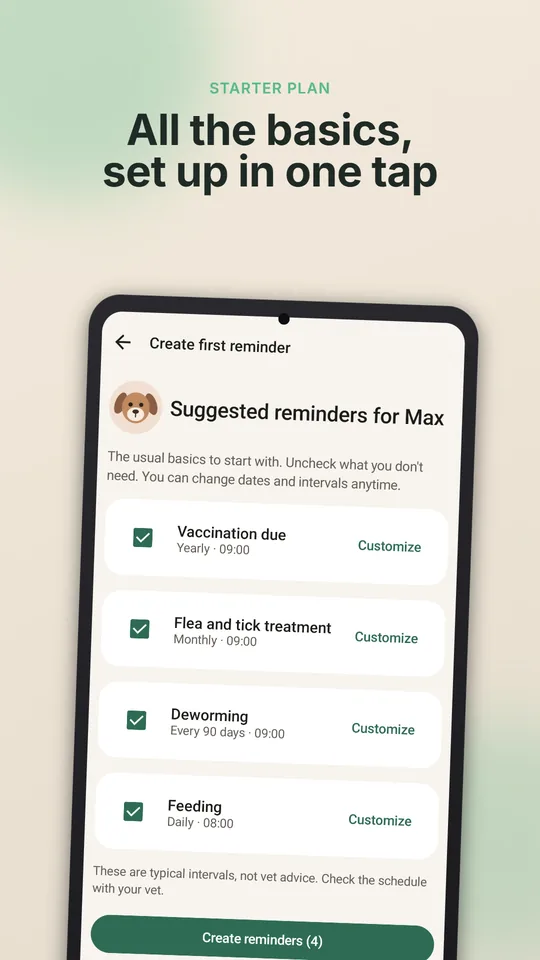
A schedule is easiest to follow when meal times, portions and weights live together. In PetCare Offline you can create feeding reminders, log weight entries on a regular day each month, keep supply notes so you know when a bag will run out and share a PDF summary with your vet or a sitter. Everything is stored on your phone, with no account or internet needed. See also supply reminders so you never run out of food mid-week.
Frequently asked questions
How many times a day should a puppy eat?
Young puppies often eat about four times a day until around 12 weeks, three times a day until about six months and two times a day after that, although toy, large and giant breeds can differ. Confirm the pattern with your vet and the food label.
How many times should an adult dog eat?
Most healthy adult dogs do well on two meals a day, spaced 8 to 12 hours apart. Your vet may recommend a different pattern if your dog has a medical condition.
How much should I feed my dog?
Start with the food label, adjust for body condition and weight trend, and confirm with your vet. A common starting estimate for a typical neutered adult is about 1.6 times resting energy requirement, 70 × (kg)^0.75 kcal a day, but individual dogs vary widely.
How do I know if I am feeding the right amount?
You should be able to feel the ribs under light pressure, see a waist from above and a tuck from the side. Weigh your dog regularly: a steady trend up or down means the portion needs a review.
Do senior dogs eat less?
Often, but not always. Some older dogs gain weight, others lose muscle and weight. Ask your vet about the right diet and weigh monthly.
When should I change a puppy from three meals to two?
Many puppies move to two meals at around six months, but the right time depends on breed and size. Ask your vet at a puppy visit.
Sources and further reading
How this article was created
This article was drafted with the help of artificial intelligence and edited against the app's published feature list. The independent developer is responsible for publication and accepts correction reports. Verify health, safety, legal, financial and official requirements with a primary source or qualified professional.
Questions and corrections: brightwaveapp@gmail.com. Legal and privacy information.