 PetCare
Senior pets
Senior Dog and Cat Care: A Practical Routine
Older pets change slowly, and slow changes are easy to miss. A little more structure — regular check-ups, a few things you watch and write down, and a home that is easier to move around — helps your pet stay comfortable and helps your vet spot problems early.
When is a pet "senior"?
It depends on species and size. The AVMA describes cats as senior after about 10 years, and suggests considering dogs senior in roughly the last quarter of their breed's expected lifespan — which comes earlier for large and giant breeds. Ask your vet when to switch to a senior care plan.
Vet visits
The AVMA recommends that senior pets see a veterinarian at least twice a year rather than once, often with blood and urine tests. Six months is a long time in an older animal's life, and conditions like kidney disease, thyroid problems, arthritis and dental disease are easier to manage when found early. Set a recurring reminder for the check-up and store results in the pet's documents so you can compare them over time.
What to watch and log
| Change | Why it matters |
|---|---|
| Weight (monthly or as your vet advises) | Unexplained weight loss is an early sign of many conditions |
| Drinking and urination | Increases can point to kidney, hormonal or other problems |
| Appetite | Eating less, chewing on one side, dropping food |
| Mobility | Stiffness after rest, hesitating at stairs or jumps, slower walks |
| Behaviour and sleep | Night waking, confusion, less interest in people or play |
| Lumps | Size and location, with a photo |
In PetCare Offline, use the weight, symptom, activity, mood and custom-note logs for these. A few lines a week show trends that are invisible day to day, and a PDF summary puts them in front of your vet.
Comfort at home
- Non-slip rugs on smooth floors; ramps or steps to favourite sofas and beds.
- Thicker, supportive bedding in a warm, draught-free spot.
- Litter trays with a low entry for cats with stiff joints; more than one tray on different floors.
- Food and water where they are easy to reach, possibly raised for large dogs.
- Shorter, more frequent walks instead of one long one.
- Gentle mental activity: sniffing games and food puzzles keep older minds engaged.
Medication organisation
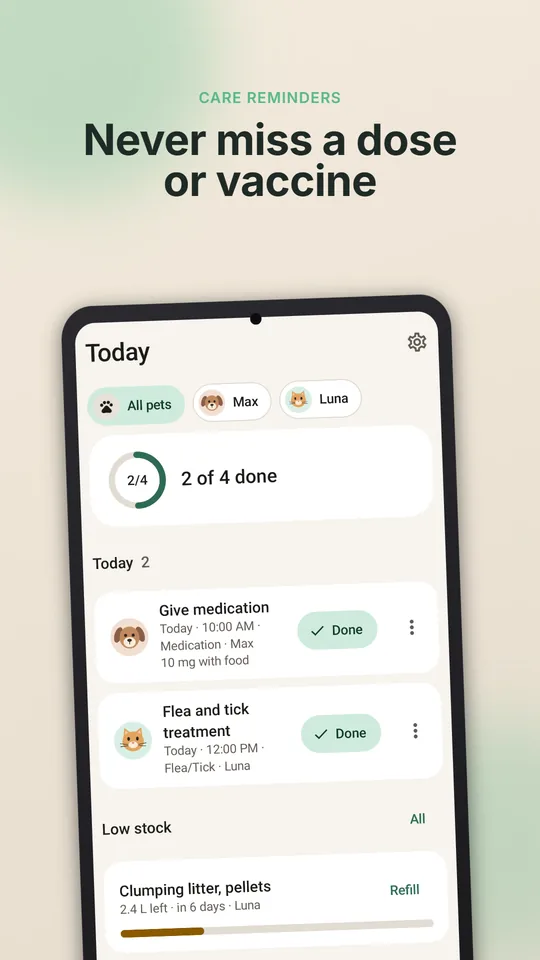
Senior pets often take several medications or supplements. Set a reminder for each, exactly as prescribed, log each dose, and keep the prescriptions as documents. Track refills so a long-term medication never runs out — see supply reminders. Do not add supplements or human pain relievers without talking to your vet; some common human medicines are toxic to pets.
Keep a "good day" note. Write down what a normal good day looks like for your pet now — appetite, walks, play. It makes it much easier to notice, and describe to your vet, when things start to change.
See the vet promptly for
Sudden weight loss, not eating for more than a day, marked increase in thirst, difficulty breathing, collapse, sudden lameness, or signs of pain such as restlessness, panting at rest or hiding.
Frequently asked questions
How often should a senior pet see the vet?
Many vets recommend every six months for senior pets, often with blood and urine tests. Your vet will advise based on your pet's age and health.
What should I monitor in an older dog or cat?
Weight, drinking and urination, appetite, mobility, behaviour and sleep, and any lumps. Logging them regularly shows trends to discuss with your vet.
Can I give my senior dog human pain medication?
No, not without your vet. Several common human pain relievers are toxic to dogs and cats.
Sources and further reading
How this article was created
This article was drafted with the help of artificial intelligence and edited against the app's published feature list. The independent developer is responsible for publication and accepts correction reports. Verify health, safety, legal, financial and official requirements with a primary source or qualified professional.
Questions and corrections: brightwaveapp@gmail.com. Legal and privacy information.