Dog feeding schedule: times, portions, and habits
Meals at fixed times do more than fill a stomach: digestion becomes predictable, potty breaks become predictable, and appetite changes surface within a day.
Why fixed meal times win
When food arrives at the same times each day, digestion falls into a rhythm — and so does the walk schedule, because what goes in on schedule comes out on schedule. Fixed meals also turn appetite into a reliable signal: a dog who normally finishes in ninety seconds and suddenly leaves half the bowl is easy to notice when there is a normal to compare against. Free-feeding hides that signal for days.
How many meals per day
- Puppies: usually need more frequent meals; ask your veterinarian for an age- and size-appropriate schedule.
- Adult dogs: use the food label as a starting point and choose a consistent schedule for the individual dog.
- Seniors and dogs with medical needs: split the day as your vet advises.
Small, frequent meals matter most for puppies: they burn energy fast and carry it in small stomachs.
Portions: label, vet, and body condition — not the bowl
Package guidelines are wide ranges, not prescriptions. Start there, confirm with your vet, then let body condition decide: ribs easy to feel with light pressure, a visible waist from above, a tuck from the side. The bowl's size is not a measuring device — a kitchen scale or measuring cup is. Make portion changes with veterinary guidance and judge them using weight trends and body condition, not a universal percentage.
Treats have a budget
Treat guidance varies with the dog’s age, size, health, and diet. Treat any percentage as a starting point to discuss with your vet, and subtract treats from meals rather than stacking them on top. Training days can quietly increase a ration — many dogs happily work for pieces of their regular kibble. A short wait before the bowl doubles as daily impulse-control practice; the wait-cue guide from our sister app GoodBoy shows how to build that calm patience into everyday routines.
Water always, transitions slowly
Fresh water should be available at all times, washed and refilled daily. Unless your veterinarian advises otherwise, introduce a new food gradually while watching appetite, stool, skin, and comfort. The appropriate pace varies by dog and diet.
Note reactions to new foods
Loose stools, itching, ear flare-ups or gassiness after a change deserve a note: what was introduced, when, and what you saw. A short written history turns a vague feeling that something disagrees with your dog into concrete data your vet can actually work with.
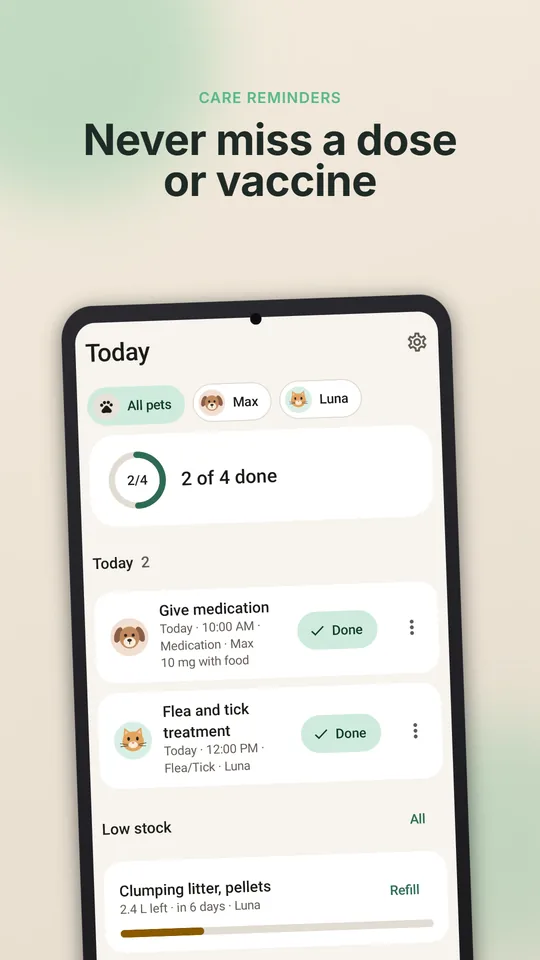
Use PetCare Offline on Android to set meal-time reminders, log how a new food agrees with your dog, and keep the feeding routine — and its history — fully offline.
FAQ
How many times a day should I feed my dog?
Meal frequency depends on age, size, health, diet, and veterinary advice. Puppies generally need more frequent meals than healthy adults; use the food label as a starting point and confirm an individual schedule with your veterinarian.
How do I switch my dog to a new food?
Unless your veterinarian advises otherwise, introduce the new food gradually and watch appetite, stool, skin, and comfort. The appropriate pace varies by dog and diet; contact your veterinarian if symptoms appear or persist.
How this article was created
This content was generated with artificial intelligence. The independent developer is responsible for publication and accepts correction reports. Verify health, safety, legal, financial and official requirements with a primary source or qualified professional.
Questions and corrections: brightwaveapp@gmail.com. Legal and privacy information.