Pet weight tracking: keep your dog or cat at a healthy weight
Weight is one of the few health numbers you can measure at home every month with nothing more than a scale. Tracked consistently, it tells a surprisingly complete story about your dog or cat.
Why steady weight matters
A stable weight usually means a stable pet. Slow, creeping gain stresses joints, heart and metabolism, and quietly raises the risk of diabetes — most overweight pets got there a few hundred grams at a time. Sudden loss is the alarm in the other direction: a pet who drops weight while eating normally, or who loses appetite and weight quickly, often has a problem brewing long before anything else is visible. Both directions are far easier to spot on a trend line than in memory.
How to weigh your pet at home
You do not need clinic equipment — just the right household trick for the size of your pet:
- Cats and small dogs: place them in a carrier or box on a kitchen scale and subtract the weight of the container.
- Medium pets: use the hold-and-subtract method only if you can lift and hold the animal securely without strain; otherwise use a clinic or pet scale.
- Large dogs: ask a veterinary clinic or pet service where a calibrated floor scale is available; do not lift an animal you cannot hold safely.
Pick a day and keep it
Weigh on the same day each month, ideally in the morning before breakfast. There is no universal interval. Ask your veterinarian how often to weigh your pet based on age, health and the purpose of monitoring. What matters is comparability — same scale, same time of day, same conditions.
Record the number and the story around it
A weight entry is most useful with context: the date, the number, and a one-line note on appetite and body condition. Can you feel the ribs with light pressure? Is there a visible waist from above? Those two checks take ten seconds and turn a bare number into a small health snapshot.
Trends beat single numbers
Scales wobble, and a full bowl or a full bladder shifts readings by small amounts. One measurement says little; three points in a row heading the same direction say a lot. A gentle upward creep is your cue to trim portions slightly, while a steady decline deserves close attention and, often, a phone call.
When changes warrant a vet call
Call the clinic about an unexplained or continuing weight change, especially when it appears with lethargy, vomiting or appetite swings. Monthly weigh-ins are also the feedback loop for feeding: they tell you whether the portion on the label is actually right for your pet. Movement matters just as much — the daily dog training routine from our sister app GoodBoy helps you match daily activity to your dog's age and breed.
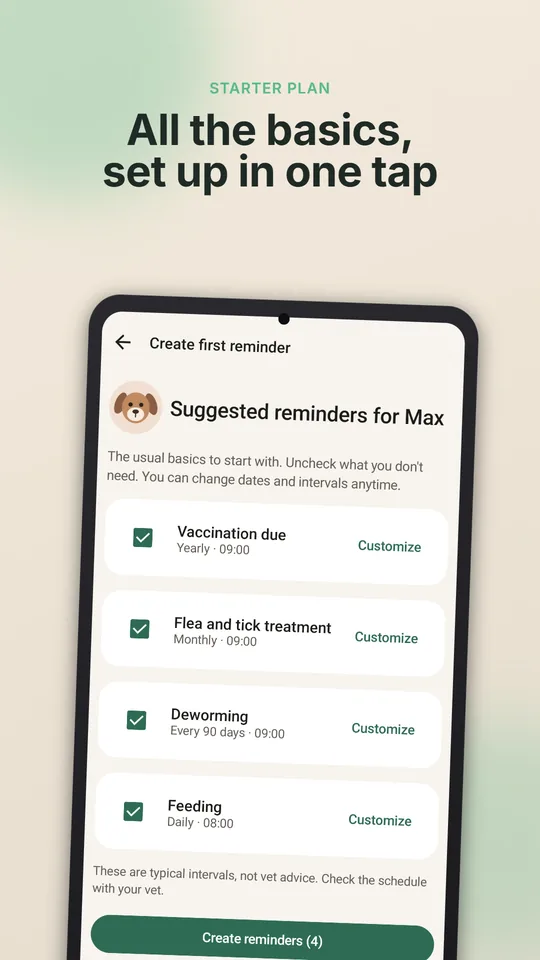
Use PetCare Offline on Android to log monthly weigh-ins with notes, set a repeating weigh-day reminder, and see your pet's trend in one private place.
FAQ
How often should I weigh my dog or cat?
There is no universal weighing interval. Ask your veterinarian what is appropriate for your pet's age, health and monitoring plan, and use the same scale under comparable conditions.
How do I weigh a large dog at home?
Do not lift a large dog onto a household scale. Ask a veterinary clinic or pet service where a calibrated floor scale is available and how to use it safely.
How this article was created
This content was generated with artificial intelligence. The independent developer is responsible for publication and accepts correction reports. Verify health, safety, legal, financial and official requirements with a primary source or qualified professional.
Questions and corrections: brightwaveapp@gmail.com. Legal and privacy information.