 PetCare
Emergency readiness
Pet Emergency Contacts: What to Keep Ready
In a pet emergency, the worst time to search for a phone number is while you are holding a frightened animal. Ten minutes of preparation now means you can act in seconds later — or hand a sitter everything they need.
The list
| Contact | What to record |
|---|---|
| Your regular vet | Phone, address, opening hours, what they do out of hours |
| Nearest 24-hour emergency clinic | Phone, address, travel time; confirm they treat your species |
| Animal poison control | In the US: ASPCA Animal Poison Control (888-426-4435) or Pet Poison Helpline; fees may apply. Elsewhere: your national service |
| Microchip registry | Registry name, phone, chip number; check your contact details are current |
| Backup carer | Someone who can collect your pet if you are unwell or delayed |
| Pet insurance | Policy number and claims line |
| Pet sitter or boarding | Name, phone, and whether they are authorised to approve treatment |
Information the emergency vet will ask for
- Species, breed, age, weight (a recent weight helps with drug dosing).
- Current medications with doses, and known allergies or drug reactions.
- Vaccination history and ongoing conditions.
- For suspected poisoning: what was eaten, how much, and when — keep the packaging.
Keep it where you will actually find it
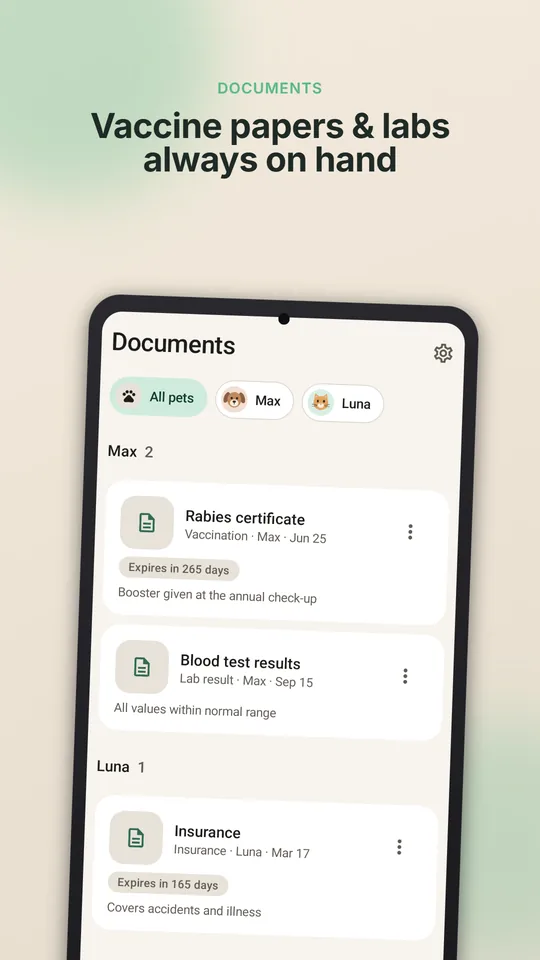
- In your phone, in the pet's profile — PetCare Offline stores vet contacts, emergency contacts, microchip and insurance details, allergies and notes per pet, on the device, with no account and no need for a signal.
- On paper, on the fridge or inside a cupboard door, for sitters and family.
- With the pet sitter: a PDF summary from PetCare Offline puts contacts, medications and routines on one page you can share before you leave.
Plan the route now. Look up how long it takes to reach the 24-hour clinic at night and where to park. Note whether you need to call ahead — many emergency clinics prefer it.
Situations where you should call straight away
Contact a vet or emergency clinic immediately for difficulty breathing, collapse, seizures, suspected poisoning, heavy bleeding, a swollen hard abdomen (especially in large dogs), inability to urinate, trauma such as a road accident or fall, or heatstroke. When in doubt, call — clinics can tell you whether you need to come in.
Keep it current
- Update the list when you move, change vets or change phone number.
- Check the microchip registry details once a year — outdated contact details are one of the most common reasons lost pets are not returned.
- Set a yearly reminder in PetCare Offline to review contacts, together with the annual vet visit.
Related: pet first aid kit checklist and what to leave for a pet sitter.
Frequently asked questions
What numbers should every pet owner have saved?
Your vet, the nearest 24-hour emergency clinic, an animal poison control service, your microchip registry, a backup carer and your pet insurer.
What is the ASPCA poison control number?
ASPCA Animal Poison Control in the US can be reached at 888-426-4435. A consultation fee may apply. Outside the US, use your national animal poison service or your vet.
Can PetCare Offline store emergency contacts without internet?
Yes. Contacts, microchip and insurance details are stored on your phone in each pet's profile and are available offline.
Sources and further reading
How this article was created
This article was drafted with the help of artificial intelligence and edited against the app's published feature list. The independent developer is responsible for publication and accepts correction reports. Verify health, safety, legal, financial and official requirements with a primary source or qualified professional.
Questions and corrections: brightwaveapp@gmail.com. Legal and privacy information.