 PetCare
Cat health signals
Cat Litter Box and Water Intake: What to Track
Cats hide illness well, but the litter box and water bowl rarely lie. Changes in how much a cat drinks or how often it uses the tray are some of the earliest signs vets ask about, and they are easy to miss unless you have a baseline to compare against.
Why these two things matter
Kidney disease, diabetes, urinary problems and hyperthyroidism often begin with subtle shifts: more drinking, larger or more frequent clumps, or a cat that keeps visiting the tray and produces little. A vet cannot see your home, so the most useful thing you can bring is a short written record of what normal looks like and when it changed.
Build a baseline first
For one week, without changing anything else, note:
- Water: refill to a marked level or measure it, and record roughly how much is gone each day. Cats on wet food drink less from the bowl, so note the diet too.
- Urine clumps: the approximate number per day in a clumping litter, and whether they look larger than usual.
- Stools: frequency, and whether they are firm, soft or hard.
- Behaviour at the tray: straining, crying, digging without result, or going outside the box.
In multi-cat homes you cannot tell whose clumps are whose. If you are worried about one cat, ask your vet how to separate it briefly or collect a sample.
What to log and how often
| Observation | How often | Notable change |
|---|---|---|
| Water level | Daily, same time | Sustained increase over several days |
| Litter clumps | Daily | Noticeably more, larger, or none at all |
| Appetite | Daily | Eating less, or suddenly ravenous |
| Weight | Monthly | Steady loss or gain |
| Litter type or tray location | When changed | Avoidance after a move or new litter |
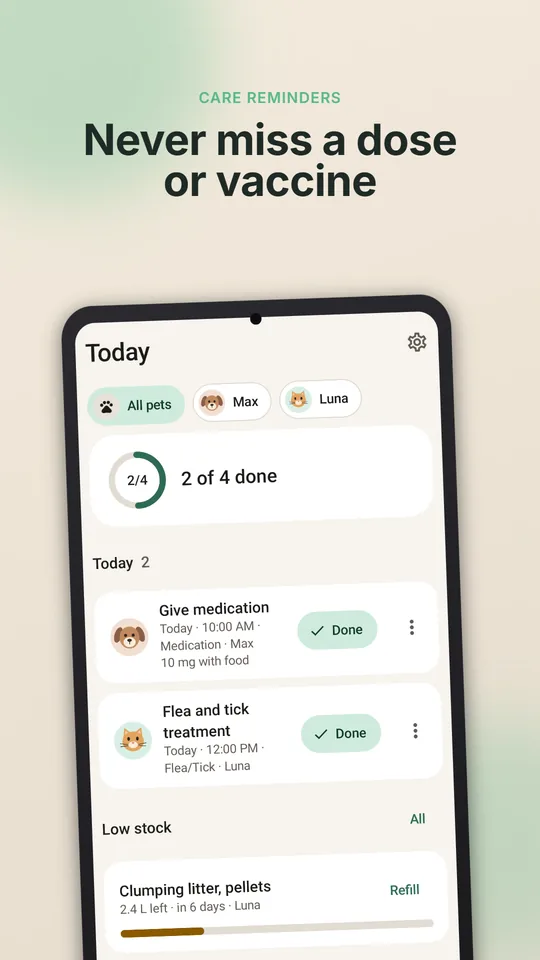
PetCare Offline lets you keep these as custom-note and symptom logs on the cat's profile, alongside weight history, so the pattern is on one screen instead of scattered across memory. Everything stays on your device.
Rule of thumb for the vet call: a change that lasts more than a couple of days is worth a message to your vet with your notes attached, even if the cat otherwise seems fine.
Call your vet the same day if
- A cat, especially a male, strains in the tray and passes little or no urine. A urinary blockage can become life-threatening within hours.
- You see blood in the urine, or the cat cries while urinating.
- The cat stops eating or drinking, or is lethargic and hiding.
- Vomiting or diarrhoea continues for more than a day.
Small habits that keep the data clean
- Scoop at the same time each day so counts are comparable.
- Change one thing at a time, such as litter brand, food or bowl position, and write down the date.
- Offer fresh water in more than one spot; some cats prefer wide, shallow bowls or a fountain.
- Keep trays away from noisy appliances and food bowls, with one more tray than the number of cats where space allows.
Frequently asked questions
How much water should a cat drink?
It varies with diet, size and weather; cats on wet food drink much less from the bowl. What matters is a sustained change from your own cat's baseline, not a universal number.
Is a cat drinking more water always a problem?
Not always: hot weather and a switch to dry food both raise intake. But a lasting increase with no clear reason is worth mentioning to your vet.
How do I track this with several cats?
Track the household baseline, and ask your vet how to identify the cat concerned if you notice a change; separating cats briefly is often the only reliable way.
Sources and further reading
How this article was created
This article was drafted with the help of artificial intelligence and edited against the app's published feature list. The independent developer is responsible for publication and accepts correction reports. Verify health, safety, legal, financial and official requirements with a primary source or qualified professional.
Questions and corrections: brightwaveapp@gmail.com. Legal and privacy information.