New pet first 30 days: setup and records
The first month with a new pet sets patterns that can last for years. It deserves a lighter calendar and a heavier notebook: less entertainment, more predictability — and records started on day one.
Week 1: decompression over entertainment
A new pet does not need a welcome party; it needs quiet. Keep visits, noise and novel experiences to a minimum for the first days. Book a baseline vet checkup in week one even if the animal looks healthy. Set up simple spaces — a bed, water and food bowls, a litter tray for cats — and agree the house rules as a family before arrival: who feeds, who walks, which rooms are open.
Week 2: routines settle, records begin
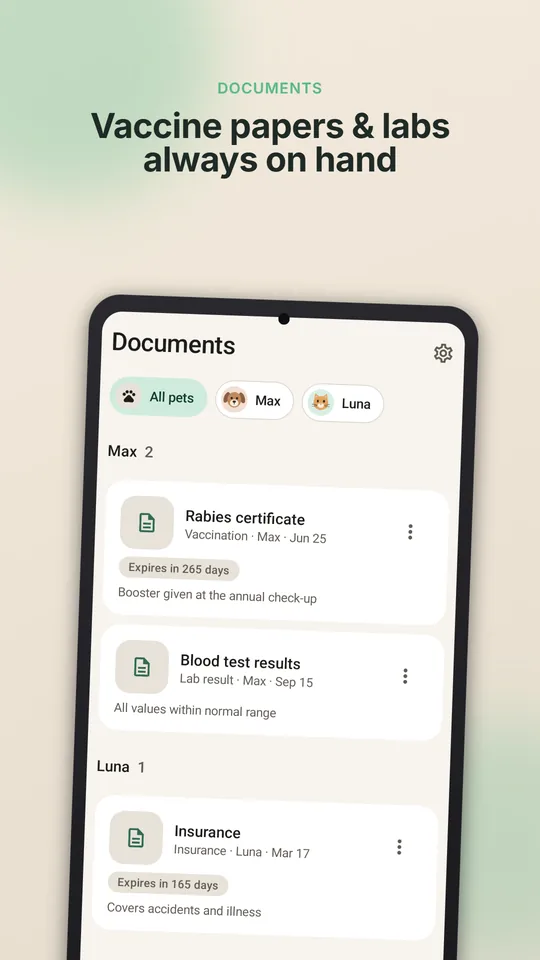
Feeding, sleep and toilet times start to stabilize, and now the notebook earns its place. Start the vaccination plan, record the first weight, and write down the food brand and portions the pet arrived with — future food changes are judged against this baseline.
Weeks 3–4: handling, grooming, socialization
Add short, gentle handling sessions: paws, ears, teeth, brushing. Two minutes of calm touching daily builds grooming habits that last for years. For young animals, begin careful socialization once vaccine status allows it. Do a supplies stocktake and note what runs out fastest — food, litter, poop bags — so the first shortage never surprises you.
What to write down from day one
Food and portions, reactions — stool, scratching, mood — medication doses, weights. Individually these are throwaway observations; collected over weeks they compound into a health history no memory can reconstruct. For dogs, structure settles the mind too: the adult dog training guide and the puppy training schedule from our sister app GoodBoy translate the same first-month logic into short daily sessions.
The new-home checklist, in short
- bed, bowls and the food the pet arrived with
- litter tray and scoop for cats, a carrier for everyone
- a vet visit booked in week one
- house rules agreed before arrival
- records and reminders started on day one
Get PetCare Offline on Android to set up the first routines, reminders and a health log in the pet's first week — private and offline from the very first note.
Pet-proof the home before day one
- Lift cables, chargers and blind cords out of reach; puppies and kittens chew.
- Move cleaning products, medicines, batteries and small objects into closed cupboards.
- Check houseplants and bouquets — lilies, for example, are dangerous to cats.
- Close off gaps behind appliances where a small animal could get stuck.
- Set up a quiet resting place away from busy walkways, with water close by.
Pet-proofing is easier before the new arrival than while chasing them. Walk through at their eye level: kneel down and look for anything within reach.
FAQ
When should a new pet first see a vet?
Within the first week, even if the pet looks healthy. A baseline checkup confirms weight, condition and parasite status, starts or checks the vaccination plan, and gives you a reference point for everything that follows.
How long does it take for a new pet to settle in?
A rough rule: three days to decompress, three weeks to learn the routines, three months to feel fully at home. Progress is rarely linear — quiet observation beats constant entertainment in every phase.
How this article was created
This content was generated with artificial intelligence. The independent developer is responsible for publication and accepts correction reports. Verify health, safety, legal, financial and official requirements with a primary source or qualified professional.
Questions and corrections: brightwaveapp@gmail.com. Legal and privacy information.