 PetCare
Kittens
Kitten's First Vet Visit: What to Expect and Bring
A kitten's first vet appointment is mostly a conversation and a check-up: the vet looks at everything from eyes to tail, tests for infections that matter in cats, starts the vaccine and parasite schedule and answers the questions you did not know you had. A little preparation makes it quicker, calmer and more useful.
When to go
Book the first visit within a few days of bringing a kitten home — many vets suggest within the first week, even if the kitten seems perfectly healthy and the shelter or breeder has done some checks. Kittens are usually first seen at about 6 to 8 weeks of age, and the first visit also serves as a baseline: weight, body condition, eyes, ears, teeth and heart, so changes are easy to spot later. If a kitten is sneezing with discharge, has diarrhoea, is lethargic or is not eating, do not wait for a routine slot: ask for a same-day appointment, because kittens can deteriorate quickly.
If you already have other cats, keep the newcomer in a separate room until the vet has examined and tested it, and wash hands between handling them.
What to bring: a checklist
- A secure carrier, lined with a towel that smells of home. Use a hard-sided or sturdy soft carrier that closes properly, never just a box or your arms.
- Any records from the shelter or breeder: vaccines and dates, deworming, flea treatment, microchip number, and any health tests.
- A fresh stool sample (ideally within 12 hours, in a sealed bag or the container the clinic gives you) so the vet can check for intestinal parasites.
- The food the kitten is eating, or a photo of the label, and how much and how often.
- Your notes: appetite, litter-box habits, sneezing, scratching, behaviour — and your list of questions.
- Small treats or favourite wet food, and a toy, to help the kitten stay calm.
- Contact and payment details for any insurance or adoption paperwork that includes free first-visit cover.
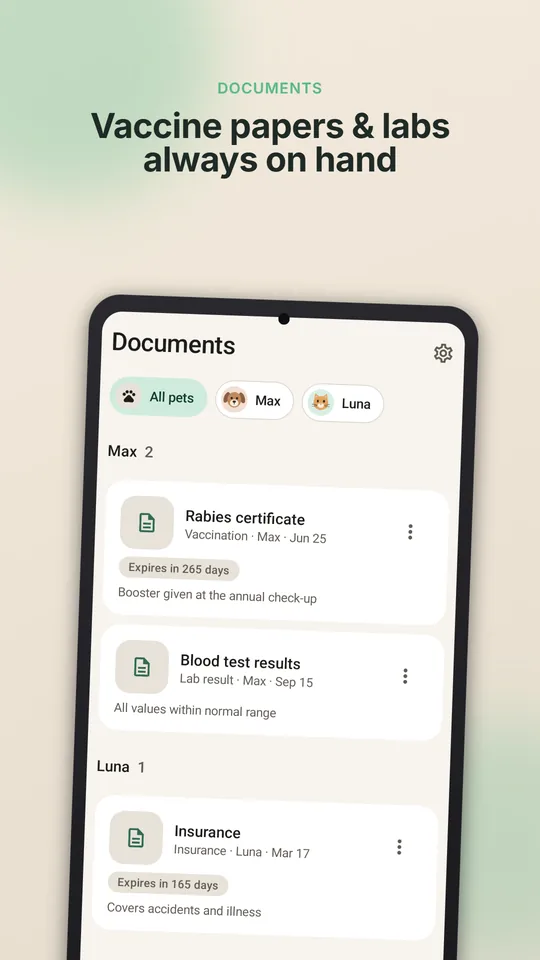
Have all of this in one place before you leave: records scattered across emails are the usual reason a first visit has to be repeated. The pet profile in PetCare Offline holds the microchip number, documents, feeding notes and a PDF summary you can show at the desk.
Getting a kitten into the carrier calmly
- Leave the carrier out in the room for several days beforehand, with a blanket and a few treats inside, so it becomes furniture rather than a threat.
- Feed a meal or play near the carrier, then inside it with the door open.
- On the day, do not chase. Pick the kitten up calmly and lower it in from the top if the carrier opens that way, then close the door and cover the carrier with a light towel.
- Secure it in the car, on the seat with the seatbelt around it or on the floor behind a seat, so it does not slide.
- Keep the waiting room quiet, and keep the carrier off the floor if there are dogs.
Some vets suggest a pheromone spray on the towel about 15 minutes before leaving. It helps some kittens; it is not essential.
What happens during the exam
The vet will usually weigh the kitten and check temperature, eyes, nose, ears (for ear mites and discharge), mouth and teeth, skin and coat (for fleas and mites), heart and lungs, abdomen and genitals, and the way the kitten walks and plays. Expect questions about diet, litter and any contact with other animals. Then comes the plan:
| Topic | What is typical |
|---|---|
| Vaccination | A core feline combination vaccine (against panleukopenia, herpesvirus and calicivirus) is usually started at about 6 to 8 weeks and repeated every 3 to 4 weeks until around 16 weeks. Rabies vaccination is given from about 12 weeks, depending on local law and the product. |
| FeLV and FIV testing | Many vets test new kittens for feline leukaemia virus (FeLV) and feline immunodeficiency virus (FIV) with a simple blood test, particularly before mixing with other cats. A FeLV vaccine is often advised for kittens. |
| Deworming | Kittens often carry roundworms, so a deworming schedule starts early and is repeated; your vet will choose the product and dose by weight. |
| Fleas and ticks | Your vet will suggest a kitten-safe product. Check the label for minimum age and weight, and never use dog flea products on a cat: some contain permethrin, which is dangerous for cats. |
| Microchip | Implanted quickly in the consultation; register it and keep your contact details current. |
| Spay or neuter | Timing varies by clinic and kitten: your vet will advise an age and weight. |
The exact schedule depends on your country, the products your clinic uses and your kitten's history. Ask the vet to write the dates down or add them to the record, and put each next date in a reminder straight away. See what to keep in a vaccination record and the flea and tick calendar.
Questions worth asking
- Which food and how many meals a day for this kitten's age and weight?
- When are the next vaccines and boosters, and when is it safe to go outside or meet other cats?
- Is indoor-only or indoor-with-supervised-access right for this kitten?
- Which flea, tick and worm products, and how often?
- When should the kitten be neutered or spayed, and what does it involve?
- What are signs that mean "call us today"?
- Is pet insurance worth considering now, before any condition is recorded?
After the visit
A little sleepiness, a slightly lower appetite or a sore spot at the injection site is common for a day or so. Facial swelling, hives, repeated vomiting, difficulty breathing or collapse after a vaccine needs an emergency vet immediately. Keep the kitten indoors until your vet confirms the vaccine series is complete, keep the litter box very clean and weigh it weekly or as your vet advises, noting its appetite. Rapid weight loss, diarrhoea or refusing food are reasons to call the same day.
Log the visit while you are still in the car park: date, weight, vaccines given, next due dates, products and dose, and the vet's advice. In PetCare Offline you can add the vaccine and deworming reminders, store the vaccination certificate as a document and keep weight entries together so you can see growth over the first months. For the first few weeks at home, our first 30 days guide covers the routine, and the first vet visit checklist is a shorter version for puppies and kittens.
Frequently asked questions
When should a kitten first see a vet?
Within a few days of coming home — many vets suggest within the first week — and typically from about 6 to 8 weeks of age. Go the same day if the kitten is sneezing with discharge, has diarrhoea, is lethargic or is not eating.
What should I bring to a kitten's first vet visit?
A secure carrier, any shelter or breeder records, a fresh stool sample, the food the kitten eats, your notes and questions, and a few treats. Include the microchip number if the kitten has one.
What vaccines does a kitten need?
Typically a core combination vaccine started around 6 to 8 weeks and repeated every 3 to 4 weeks until about 16 weeks, with rabies from about 12 weeks depending on local rules. Your vet will set the schedule and may recommend a feline leukaemia vaccine.
Will my kitten be tested for diseases?
Many vets test new kittens for FeLV and FIV with a simple blood test and check a stool sample for parasites, particularly before the kitten meets other cats.
Is it normal for a kitten to be sleepy after vaccines?
Mild tiredness or lower appetite for a day is common. Facial swelling, hives, repeated vomiting or breathing difficulty is an emergency; contact an emergency vet immediately.
Can I use dog flea treatment on a kitten?
No. Some dog products contain permethrin, which is toxic to cats. Use only a product your vet recommends for kittens, and check the minimum age and weight on the label.
Sources and further reading
How this article was created
This article was drafted with the help of artificial intelligence and edited against the app's published feature list. The independent developer is responsible for publication and accepts correction reports. Verify health, safety, legal, financial and official requirements with a primary source or qualified professional.
Questions and corrections: brightwaveapp@gmail.com. Legal and privacy information.