Flea, tick, and parasite prevention calendar
Fleas and ticks can be a seasonal concern, but the right plan depends on your region and pet. This guide helps you keep veterinary advice, product instructions, post-walk checks, and records in one place.
Parasites have a season — your plan does not
Parasite activity varies by region, season, local conditions, and your pet’s lifestyle. Heated homes can support fleas outside the usual outdoor season, while tick activity also varies locally. Ask your veterinarian which risks apply and whether year-round prevention is appropriate for your pet.
Choose products with your vet, not by habit
Spot-ons, oral tablets and collars all work when matched to the pet, and all underperform when chosen casually. The right product depends on species, weight, age, health and lifestyle — a hiking dog and an indoor cat need different plans. One rule is absolute: dog products can be toxic to cats. Permethrin-based spot-ons for dogs can cause severe, sometimes fatal poisoning in cats, so never share a pipette between pets, even once, even in a pinch. Buy by weight band, respect the packet interval, and let your vet approve the overall plan.
Give prevention a monthly rhythm
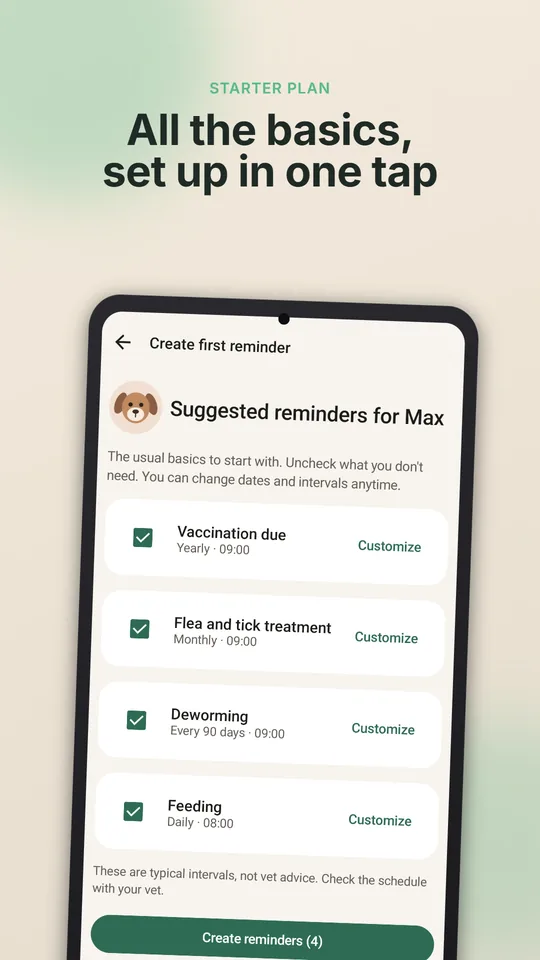
Products have different approved intervals. Follow the label and your veterinarian’s plan exactly; do not reuse another pet’s product or schedule. Reminders can help you record the date due, but they cannot determine which product or dose is safe.
The two-minute post-walk check
After walks in grass, woods or parks, run your hands over your dog: inside the ears, under the armpits, between the toes and around the groin are where ticks attach most often. Outdoor cats deserve the same patrol. Add the check to your usual return-home routine after long or active outings.
Symptoms that betray a problem
Scratching, head shaking, small scabs near the tail base, or dark pepper-like specks in the coat can have several causes. A tick can look like a small lump with legs. If you find a tick, suspect a parasite problem, or notice illness, contact a veterinarian for guidance instead of relying on a general timeline.
Write down every dose
For each treatment, record the exact product name, the dose or pipette size, the date given and the next due date. In a multi-pet home this prevents accidental double-dosing, at the clinic it proves the schedule, and if parasites break through it shows which product to change.
Install PetCare Offline on Android to schedule monthly parasite protection, log every product and dose, and stop guessing when the next treatment is due.
FAQ
Do pets need flea and tick protection in winter?
Risk varies by region, weather, housing, travel, and the product used. Ask your veterinarian whether year-round prevention fits your pet, and follow the EPA-approved product label exactly; do not use a calendar or temperature threshold as a substitute.
Can I use my dog's flea product on my cat?
Never without asking your vet. Some dog spot-ons, especially permethrin-based ones, are highly toxic to cats and can cause severe poisoning. Each product must match the species, weight and age of the individual pet.
How this article was created
This content was generated with artificial intelligence. The independent developer is responsible for publication and accepts correction reports. Verify health, safety, legal, financial and official requirements with a primary source or qualified professional.
Questions and corrections: brightwaveapp@gmail.com. Legal and privacy information.