Pet first aid kit checklist
A first aid kit will not turn you into a vet — nothing in a box can. Its job is narrower: keep essential supplies and emergency contacts together while you contact a veterinary clinic. It is not a way to diagnose, treat, or delay professional care.
What belongs in the kit
Keep everything in one closed box, at home or in the car, and make sure every adult in the house knows where it is:
- gauze rolls and non-stick wound pads
- self-adhesive vet wrap that sticks to itself, not to fur
- blunt-tip scissors and tweezers
- a dedicated tick remover
- a digital thermometer — a pet's normal range sits higher than ours
- saline solution for rinsing eyes and wounds
- a dosing syringe for liquids, used only when a veterinarian has told you what to give and shown you how
- a soft muzzle only for a conscious dog that is breathing normally and is not vomiting, plus a secure carrier for cats; never muzzle an unconscious animal or one with breathing difficulty or vomiting
- an emergency contact card: your clinic, the after-hours number, the animal poison hotline
Check the kit, not just build it
Bandage material ages, saline expires and thermometer batteries die. Set a recurring reminder to open the box every few months, check expiry dates and restock anything you used the day you used it. An untouched kit three years stale is barely a kit.
Three rules worth memorizing
For bleeding, apply clean gauze with gentle, steady pressure while contacting a clinic; heavy, persistent, or worsening bleeding needs urgent veterinary care. Do not give human painkillers. For ticks, follow your veterinarian’s advice and the remover’s instructions.
Pain shows in posture before it shows plainly
Injured pets hide discomfort skillfully. A dog often signals pain through posture, breathing and behavior long before it becomes obvious to the family — the dog body language basics guide from our sister app GoodBoy teaches the early signs.
Write down what you did
After any first aid, note what you used, on which pet and when — times, doses, materials. Arriving at the clinic with these notes instead of a stressed recollection makes the intake faster and safer.
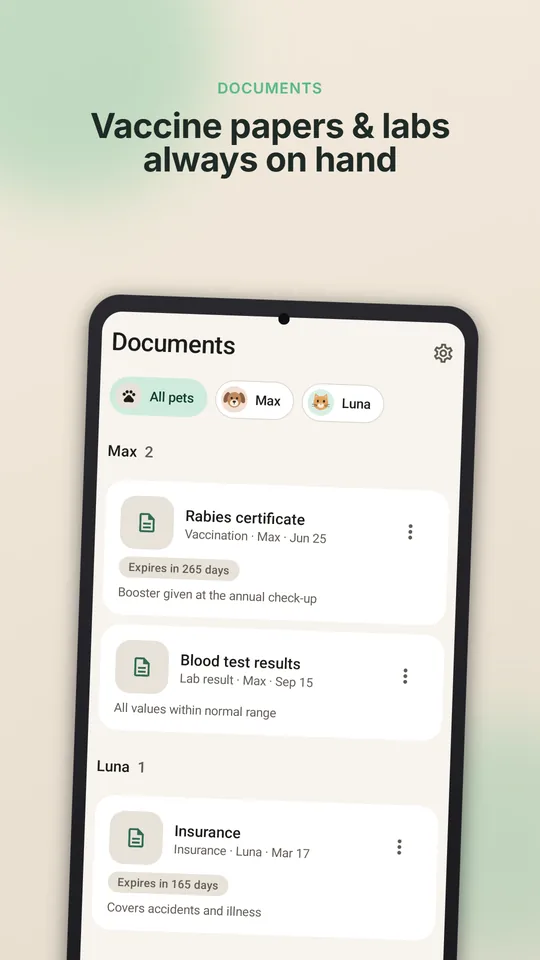
Get PetCare Offline on Android to keep your first aid checklist and expiry reminders in one private, offline place — with room to log what was used and when.
Where to keep the kit
A kit only helps if you can reach it quickly. Keep one at home in a known place, and a smaller one in the car or walking bag with the basics: gauze, a bandage, saline, a tick remover, a foil blanket and your vet's number. Tell everyone at home and any pet sitter where it is.
First aid is what you do on the way to the vet, not instead of the vet. Never give human medicines, including common pain relievers, unless a veterinarian tells you to.
FAQ
What belongs in a pet first aid kit?
Gauze rolls, non-stick pads, self-adhesive vet wrap, blunt-tip scissors, tweezers with a tick remover, saline solution, a dosing syringe for veterinarian-directed use, a soft muzzle only for a conscious dog breathing normally and not vomiting, a carrier for cats, and an emergency card with clinic and poison-control numbers. Ask your veterinarian whether any additional item is appropriate for your pet.
Can I give my pet a human painkiller before the vet visit?
Do not give any human pain medicine unless a veterinarian specifically directs you to. Acetaminophen can be fatal to cats, and human pain relievers can seriously harm dogs and other pets. Call a veterinarian or animal poison-control service for instructions.
How this article was created
This content was generated with artificial intelligence. The independent developer is responsible for publication and accepts correction reports. Verify health, safety, legal, financial and official requirements with a primary source or qualified professional.
Questions and corrections: brightwaveapp@gmail.com. Legal and privacy information.