 PetCare
Allergies and sensitivities
Track Dog Allergy Symptoms for Your Vet
Allergies in dogs are diagnosed over weeks, not in one visit. What helps your vet most is a clear record: when symptoms flare, what your dog ate, what changed. A few seconds of notes a day turn "he's been itchy for a while" into something your vet can work with.
Why notes matter
Itching, ear problems, paw licking and digestive upsets can come from environmental allergies, food reactions, parasites, infections or other conditions. Your vet separates these partly by pattern — seasonal or year-round, after certain foods or not — and a log shows the pattern much better than memory.
What to record
| Log | Example entry |
|---|---|
| Itch level (0–5) | "3 — scratching at night, licking front paws" |
| Where | Ears, paws, belly, armpits, face, rear end |
| Skin and ears | Redness, bumps, hair loss, odour, discharge |
| Digestion | Vomiting, soft stool, frequency |
| Food and treats | Everything, including chews, table scraps and flavoured medicine |
| Environment | New bedding, cleaning products, a walk through long grass, season |
| Treatment given | Only what your vet prescribed, with dates |
Photos help: the same area, in the same light, every few days.
Using PetCare Offline for this
- Record known allergies and food instructions in the dog's profile, so sitters and family see them.
- Use symptom, medication and custom notes logs for daily entries, with photos.
- Store lab results and prescriptions as documents next to the logs.
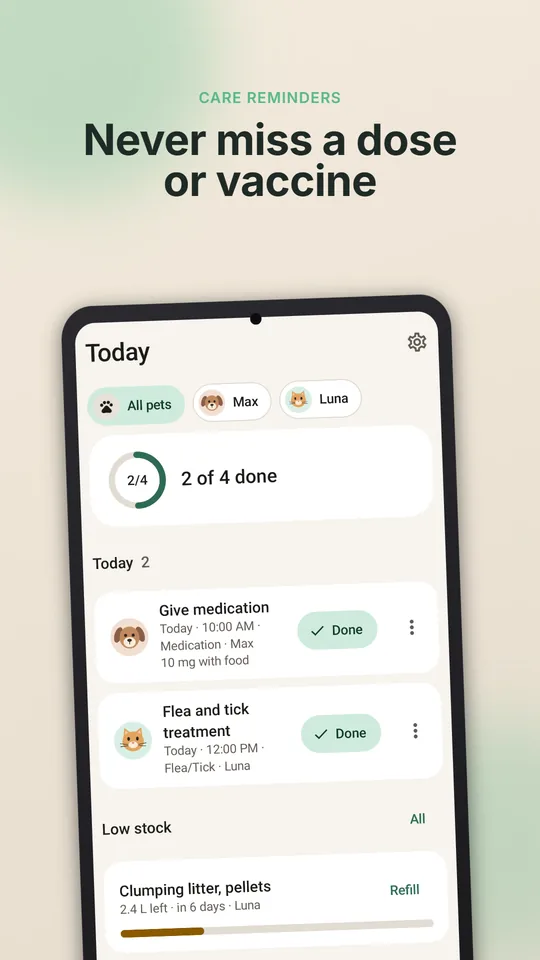
- Set medication reminders exactly as prescribed, and a reminder for the recheck appointment.
- Before the visit, create a PDF summary to show or send to the vet.
Everything stays on your phone; there is no account.
Food trials: logging matters most here
If your vet suspects a food allergy, they may recommend an elimination diet trial: a specific prescription or novel-protein diet, and nothing else, for a period your vet sets — often around eight weeks. The trial only works if it is strict, so the log should show:
- The exact diet and the start date.
- Every "slip" — a dropped sandwich, a flavoured chew, a treat from a neighbour.
- Weekly itch score and stool notes.
- Any reintroduction your vet asks for, and what happened in the following days.
Do not start an elimination diet or change medication on your own; the diet choice and duration need veterinary guidance.
Tell everyone in the house. Most failed food trials fail because someone gave a treat. Put the rule in the profile's food instructions and on the fridge.
Call the vet promptly if
You see facial swelling, hives across the body, difficulty breathing, repeated vomiting, or a collapse — these can be signs of a serious reaction and need urgent care.
Related: preparing for a vet visit and medication reminders.
Frequently asked questions
What should I track if my dog has allergies?
Daily itch level, where on the body, skin and ear changes, digestive signs, everything eaten, environmental changes, and any vet-prescribed treatment — with photos every few days.
How long does a dog food elimination trial last?
Your vet decides the diet and duration; trials often run around eight weeks. The trial must be strict, so log every food and any slips.
Can I share my dog's allergy notes with the vet?
Yes. PetCare Offline can create a PDF summary of a pet's records that you can show or send before the appointment.
How this article was created
This article was drafted with the help of artificial intelligence and edited against the app's published feature list. The independent developer is responsible for publication and accepts correction reports. Verify health, safety, legal, financial and official requirements with a primary source or qualified professional.
Questions and corrections: brightwaveapp@gmail.com. Legal and privacy information.